Gastrocolonialism and the Unmaking of Worlds
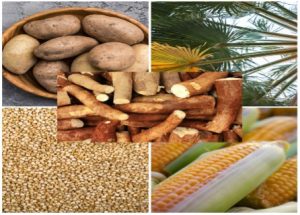
The relentless displacement of local food systems in Eastern Indonesia by standardized rice and ultra-processed foods (UPFs) is often narrated as a simple story of dietary change, a natural byproduct of modernization and national integration. However, viewed through the theoretical lens of Arturo Escobar’s Designs for the Pluriverse, this phenomenon reveals itself as something far more intense and violent. It is a form of gastrocolonialism that constitutes an ontological occupation, systematically dismantling relational worlds to impose a singular, unsustainable model of existence. This is not just a shift in nutrition but a clash of cosmologies, where the “One-World World” of industrial capitalism creates a war of ontological design against the pluriversal food worlds of Eastern Indonesia.
The Clash of Worlds: OWW Homogeneity vs. the Pluriversal Plate
The main idea of Escobar’s framework is the critique of the “One-World World” (OWW), a design or paradigm born of patriarchal western modernity that asserts a single, universal reality governed by the logics of dualism, extraction, and the market. The OWW operates by making other alternative realities nonexistent or invalid. In Eastern Indonesia, the OWW manifests as gastrocolonial logic that positions rice as national primary commodity, and UPFs as the peak of de-territorialized consumption, the markers of a modern and civilized diet. This logic is fundamentally dualist, it literally separates food from its ecological and cultural context, reducing it to just a mere commodity. It sees a sago, cassava, and sorghum grove not as a vibrant, ancestral being integral to community identity, but as unproductive land that needs to change into rice fields and palm oil plantations. This is the essence of the OWW’s ontological occupation, which seeks to replace a complex, place-based reality to its own homogenizing design.
On the contrary, the traditional food systems of Eastern Indonesia are vivid expressions of what Escobar explains as the pluriverse, a world where many worlds fit. For communities in Papua and Maluku, sago and cassava are not just a source for carbohydrates. It is part of a large and connected system including ancestral spirit, forest ecology, communal labor, and cultural ceremony. It is the same also for diverse tubers, local millets, and seafood. These ways of eating and the meaning inside it are not designed from the outside; they are emergent properties of centuries of process between people and place. They represent autonomous, self-organized systems of knowledge and practice just like what Escobar explains from the Latin American social movements named Planes de Vida (Life Plans). These are holistic projects for existence that integrate cultural, spiritual, and ecological dimensions, where food is inseparable from life itself.
The Mechanism of Erasure: Ontological Design and its “Double Movement”
The mechanism through which gastrocolonialism advances is definitely what Escobar identifies as ontological design. The main idea is that “design designs back.” The Indonesian state and global agribusinesses, through a concerted campaign of policy, infrastructure, and propaganda, have designed a new food reality. They built distribution networks for rice, established subsidy systems that make it artificially cheap, and released messaging that stigmatizes local foods like sago as “poor people’s food” or “backward.” This is a powerful act of design aimed at reshaping reality itself.
This design, in short, designs back and fundamentally alienate the people from their own world. Their mouth and stomach are redesigned to crave for rice and instant noodles, creating a biological dependency. Intergenerational knowledge is erased, as youth no longer learned the basic skill of making sago. The social fabric is rewoven, the communal effort of harvesting a sago palm is now replaced by the individualistic act of purchasing a plastic-wrapped product. Their land is physically transformed with biodiverse forests and gardens giving way to monoculture deserts. This then became the movement of ontological design in its most destructive form. It creates a system of design that systematically dismantles the conditions for its alternatives to exist, creating a dependent consumer who used to be an autonomous, knowledgeable citizen of their own unique world.
The Path of Resistance: Autonomous Design and the Political Activation of Relationality
Escobar’s work is not an invitation for despair, it points towards a path of resistance. The struggle to defend and revitalize local food systems in Eastern Indonesia is a prime example. This is not just a lobby for “food security” defined by calorie availability, but a radical fight for food independence, the right to decide one’s own food system.
This resistance is a form of autonomous design in action. It is not about experts designing better solutions for locals, but about local communities reclaiming their right to design their own lives from bottom to up. This then can be seen in grassroots initiatives that:
- Document and revitalize traditional knowledge of food cultivation and processing;
- Create local markets and value chains for sago, cassava, etc.;
- Develop educational programs to teach children about their food heritage in their own languages.
When people in Papua prioritize sago, they are politically activating the relational logic of their world. They are fighting not just for small things, but for something bigger in their life (the land, the knowledge, and the future). In essence, they are restoring the connection that gastrocolonialism wants to tear apart.
In conclusion, the issue of gastrocolonialism in Eastern Indonesia cannot be understood through a lens of a simple dietary transition. It is an intense ontological conflict. The OWW, through the ontological design of a homogenized food system, is engaged in a project of world-unmaking, seeking to eliminate the pluriverse realities of Eastern Indonesian communities. The resistance to this project is a heroic, region-based struggle to reconnect with the local knowledge by the right to autonomous design. The future of these regions depends not on their further integration into the global industrial food chain, but on their ability to defend their own pluriverse, to make sure that their unique and meaningful food world would exist in a world of many worlds. The choice is between a designed future dependency and ecological ruin, and an autonomously designed future of culture and life.
#
Marsekal Gimbo is a cultural activist from Poso, Indonesia, and a Master’s candidate in the Center for Religious and Cross-cultural Studies (CRCS) at Universitas Gadjah Mada. He holds a degree in Theology from Universitas Kristen Satya Wacana, where he cultivated a foundation in critical thought and cross-contextual engagement. His research focuses on the intersection of Indigenous knowledge, post-conflict reconciliation, and ecological-cultural sovereignty in Eastern Indonesia. It critically examines how dominant national and global systems impact local, place-based worlds. Marsekal’s approach combines theological reflection, ethnographic engagement, and cross-cultural analysis to advocate for the pluriversal realities of Eastern Indonesian communities, positioning their autonomous designs as vital alternatives for sustainable futures.
Counterpoint blogs may be reprinted with the following acknowledgement: “This article was published by Counterpoint Navigating Knowledge on 23 December 2025.” The views and opinions expressed on this website, in its publications, and in comments made in response to the site and publications are those of the author(s) and do not necessarily reflect the views and opinions of Counterpoint: Navigating Knowledge, its founders, its staff, or any agent or institution affiliated with it, nor those of the institution(s) with which the author is affiliated. Counterpoint exists to promote vigorous debate within and across knowledge systems and therefore publishes a wide variety of views and opinions in the interests of open conversation and dialogue.
Image credits: Potatoes, sago, cassava, sorghum, and corn as examples of the abundance of staple foods in eastern Indonesia. Collage of photos by Marsekal Gimbo (2025).

0 Comments